
Jump to content

Mikorist

👀
  • Broj sadržaja

    46946
  • Na DiyAudio.rs od

  • Broj dana (pobeda)

    653

Sve objavljeno od Mikorist

  1. Mora iz fabrike... nema ih https://eu.mouser.com/ProductDetail/Nichicon/LKG1E333MESCAK?qs=sGAEpiMZZMtZ1n0r9vR22d%2blFeYd%2bH4EppqOSwDLQkQ%3d
  2. Zavisi gde se stavljaju. Koja veličina. Ali Japanci imaju ovakav redosled i metod. Na putu signala / Coupling: Nichicon Muse ES, Elna Silmic, Elna Cerafine, Elna Tonerex, Muse FG Napajanja (Analog): Nichicon Muse KZ, Panasonic FM or Nichicon UHE, Elna Silmic/Cerafine, Muse FG Napajanja (Digital): Sanyo OS-Con, Panasonic FM, Nichicon Muse KZ Videti https://eu.mouser.com/new/nichicon/Nichicon-Audio-Caps/
  3. zamena za Black Gate su oba gore
  4. https://eu.mouser.com/ProductDetail/Nichicon/LKG1H153MKZS?qs=sGAEpiMZZMukHu%2bjC5l7YYXpXBk2uqz1oWlOZXRL4zw%3d ili
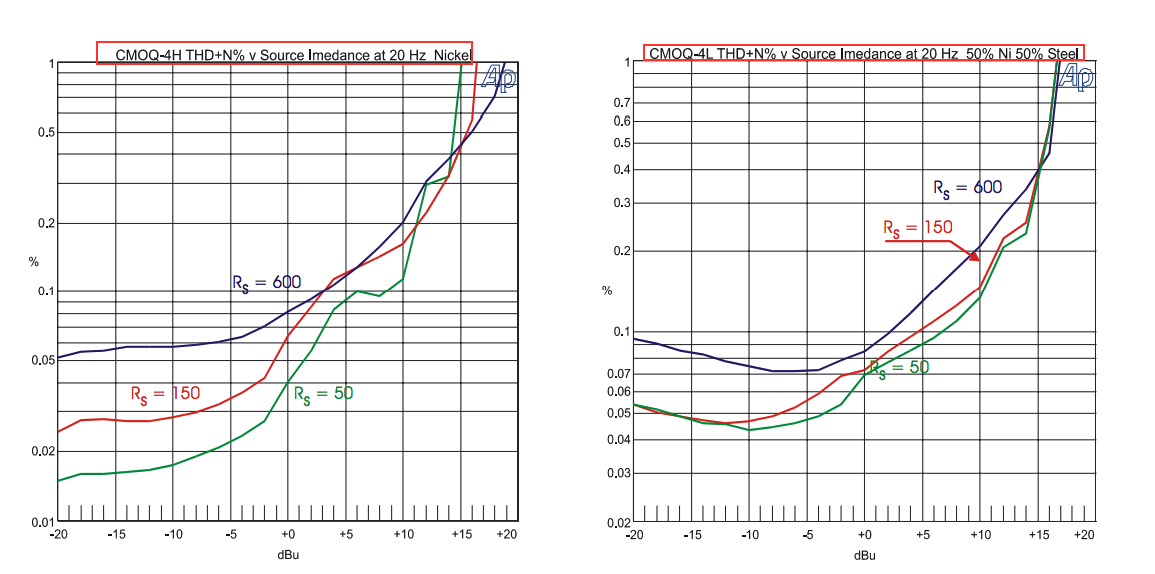
  5. ovakav graf još nisam video
  6. Evo ga i Vacum VFET https://www.sciencedirect.com/science/article/pii/S0038110117301727 još samo da počnu da ga proizvode
  7. Evo šta će da oduva i LanPe i SITove Vacuum channel transistor combines best of semiconductors and vacuum tubes April 4, 2017 by Lisa Zyga, Phys.org feature Illustrations and scanning electron microscope image of the nanoscale vacuum channel transistor. Credit: Han et al. ©2017 American Chemical Society (Phys.org)—Although vacuum tubes were the basic components of early electronic devices, by the 1970s they were almost entirely replaced by semiconductor transistors. But in the past few years, researchers have been developing "nanoscale vacuum channel transistors" (NVCTs) that combine the best of vacuum tubes and modern semiconductors into a single device. Compared to conventional transistors, NVCTs are faster and more resistant to high temperatures and radiation. These advantages make NVCTs ideal candidates for applications such as radiation-tolerant deep space communications, high-frequency devices, and THz electronics. They are also candidates for extending Moore's law—which states that the number of transistors on a computer chip doubles approximately every two years—which is expected to soon hit a roadblock due to the physical limitations of shrinking semiconductor transistors. On the other hand, traditional vacuum tubes have certain disadvantages compared to semiconductor transistors, which caused them to become obsolete. Notably, vacuum tubes are very large and consume a lot of energy. With the new NVCTs, size is no longer an issue because the new devices are produced using modern semiconductor fabrication techniques, and so can be made as small as a few nanometers across. Whereas traditional vacuum tubes look like light bulbs, NVCTs look more like typical semiconductor transistors and can only be seen under a scanning electron microscope. To address the more pressing issue of energy consumption, in a new study researchers Jin-Woo Han, Dong-Il Moon, and M. Meyyappan at the NASA Ames Research Center in Moffett Field, California, have designed a silicon-based NVCT with an improved gate structure that reduces the drive voltage from tens of volts to less than five volts, resulting in a lower energy consumption. Their work is published in a recent issue of Nano Letters. In an NVCT, the gate is the component that receives the drive voltage and, based on this voltage, it controls the flow of electrons between two electrodes. In contrast, in the old vacuum tubes, electrons were released by heating the emitter of the device. Because the electrons traveled through a vacuum (the vacuum gap), they moved at very high speeds, which led to the fast operation. In NVCTs, there is not actually a vacuum, but instead the electrons travel across a space filled with an inert gas such as helium at atmospheric pressure. Since the distance between electrodes is so small (as little as 50 nm), the probability of an electron colliding with a gas molecule is very low, and so the electrons move just as quickly through this "quasi-vacuum" as they do in an actual vacuum. Even with some collisions occurring, the gas molecules are not ionized due to the lower operating voltage. Perhaps the greatest advantage of the new vacuum transistors is their ability to tolerate high temperatures and ionizing radiation, which makes them promising candidates for the harsh environments often experienced by military and space applications. In the new study, the researchers experimentally demonstrated that the NVCTs continue to operate at the same level of performance at temperatures of up to 200 °C, whereas conventional transistors would cease to function at this temperature. Tests also showed that the new NVCTs are robust against gamma and proton radiation. In the future, the researchers plan to further improve the performance of this "new old" technology. "Future research plans include device modeling work at the nanoscale, including structure and material properties," Han told Phys.org. "Also we plan to study aging mechanisms to improve reliability and lifetime." Explore further: Return of the vacuum tube More information: Jin-Woo Han, Dong-Il Moon, and M. Meyyappan. "Nanoscale Vacuum Channel Transistor." Nano Letters. DOI: 10.1021/acs.nanolett.6b04363 Nema silikona uopšte... nije solid state a jeste tranzistor (ili je nešto između)
  8. THD na treću gruneš Duelund i zlatni osigurač i gotovo.
  9. Eto odgovora zašto sva pojačala isto sviraju.
  10. Ma ja bi gađao na 0.001 da bude THD pa kako svira
  11. Pitanje za @Zen Mod Šta misliš o Korg Nutube kao baferu ili predpojačalu ili pojačalu za slušalice ? Neki BabelFish NuTube da pravimo ?
  12. USB 2.0 za 5 V je 500mA max. USB 3.0 za 5V je 900mA max. postoji odstupanje u voltaži za USB 2.0 +0.25 -0.60 za USB 3.0 +0.25 -0.55
  13. USB sa PC definitivno nije pouzdan izvor napajanja audio uređaja, sem ako nije ekstremno dobro napajanje. Najbolje rešenje je da USB DAC ima odvojeno napajanje. Ali to nekad nije moguće kod malih prenosivih uređaja. 2 USB DAC-a sam spalio do sad kačeći ih na svašta.
  14. Takav beli sam dobio uz USB DAC . Od 497mA Kad staviš deblji pročuješ. Jer opampovi nemaju dovoljno struje
  15. Ti si u prvom postu upravo i izmerio da kablovi koje imaš ne mogu povuku više od 500mA. Kupi deblji pa da vidimo razliku.
  16. 28 data i 28 napajanje je standard 28 za data je sasvim dovoljno (za nule i jedinice). 28 za napajanje jok Kroz 28/28 uređaj teško da povuče više od 500mA. Uz tablete dolaze punjači i 2A. I odmah vidiš razliku u brzini punjenja kad staviš 24 ili veći. Isto važi i za DAC koji se napaja preko USB. Ne može dovoljno struje da povuče. I kad staviš deblji kabl čuješ.
  17. Iz gornjeg serijala se vidi odlično koliko je majstor (ne borilačkih veština) cenjen u Japanu. Evo Zec na tu temu.
  18. javlja mi se da ćemo tek da gledamo izložbu
  19. https://www.reddit.com/r/LifeProTips/comments/1yoe2a/lpt_know_why_your_smartphone_is_charging_slowly/ msm deblji od (28/24) je debeo kao pendrek
×
×
  • Kreiraj novo...