


Sipi
-
Broj sadržaja
5585 -
Na DiyAudio.rs od
-
Poslednja poseta





















Sipi's Achievements

-
 Zflazar je reagovao/la na komentar na temu:
Projekat: SVAJA
Zflazar je reagovao/la na komentar na temu:
Projekat: SVAJA
-
Дане je reagovao/la na komentar na temu:
BB DAC - AK4396
-
Aleks je reagovao/la na komentar na temu:
Projekat: SVAJA
-
OME Lambda,pojačalo Borivoja Jagodića
Sipi je odgovorio/la HomeMadeAudioProject's temus u Solid State
Ne vidim cemu ta dramska paranoicnost - nit' je Aleph 5 neko mnogo pismeno pojacalo, nit' je bilo sta na tu temu razlog za "pljuvanje" (ipak pod navodnicima jer bi se inace mnogo cesce kupovali novi monitori)... -
Idi bre Sergej u persun ! Sto se lepo ne drogiras k'o sav normalan svet nego se lozis na termjonsku pornografiju
-
Tako je - sve je OK, samo sam zaokruzio na 30W @ 8 Oma jer ti napajanje izlaznog stepena nece dozvoliti vise. Da ti je napon napajanja cirklotrona za 3V visi, sa 12V diferencijalne pobude moglo bi se dobiti 36W @ 8 Oma, al' to su sve sitnice...
-
Treba znati koliki je taj limit: sa napajanjem od +/-15V, OPA1632 ce dati na svakom od svojih izlaza oko 13V_peak, sto preneto na zvucnik znaci 26V diferencijalno a to je 42W RMS na 8 Oma odn. oko 80W RMS na 4 Oma. Da bi izlazni circlotron stepen sa dva para Lateralnih MOSFETova iskoristio u potpunosti taj potencijal odn. da on ne postavi limit swingu izlaznog napona, morao bi da bude napajan sa 2 puta po 30V DC (po kanalu). Tu je uracunat gubitak na Rds lateralaca pri struji potrebnoj za datu snagu.
-
Pa ne uvek - kod cirklotrona, na primer, signal ostaje diferencijalan od ulaza do zvucnika koji ni jednim krajem nije vezan na masu. Zatim, kod pojacavaca koji rade u mostu, za valjan rad takodje je neizbezan pogon diferencijalnim signalom. Dalje, ima pojacavaca koji su lose konstruisani pa zato bolje rade sa diferencijalnom pobudom nego bez nje, itd... Dakle nije to uvek bez veze, samo ponekad....
-
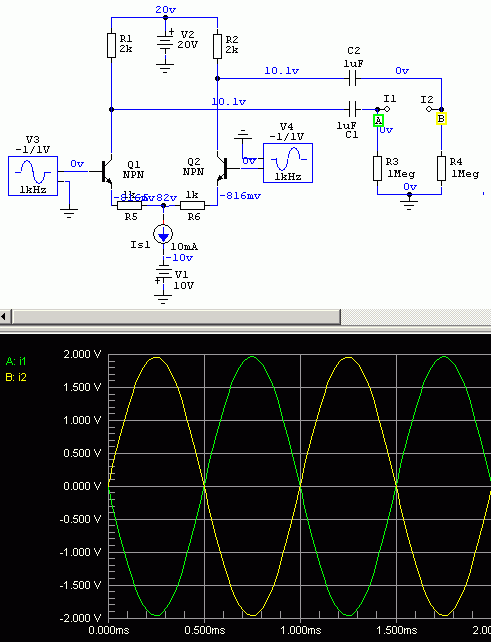
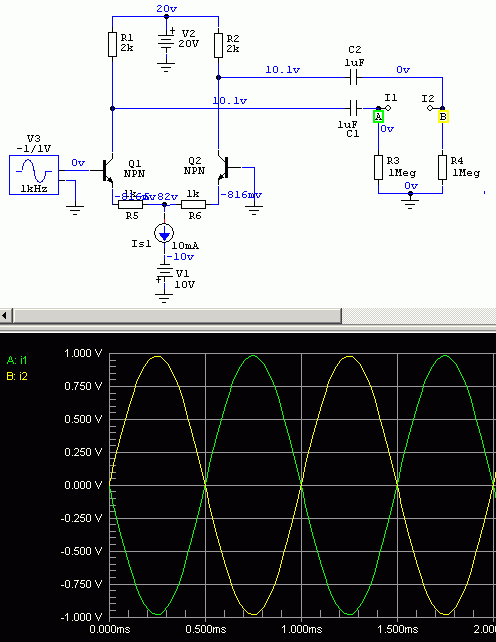
Da se vratimo na osnovne stvari, posmatrajmo jednostavan diferencijalni pojacavac (Q1,Q2) poznat i kao LTP (long tailed pair). To je najjednostavniji funkcionalan oblik te topoloske forme, bez kaskoda, bez SuSy i drugih petlji povratnih sprega, najprostije moguce. Odnosima kolektorskih i emiterskih otpora sklop je namesten na pojacanje od 2V/V. Osnovna karakteristika ovakvog spoja je sprega dva tranzistora kroz emitore koja uslovljava rad sklopa na takav nacin da on pojacava razliku dva signala na njegovim ulazima. Primena ovog kola u audio tehnici je vezana za slucaj kada se na oba ulaza dovode jednaki signali koji su medjusobno pomereni u vremenskom domenu za 180 stepeni pa kazemo da su oni suprotni po fazi i napon izmedju dva izlaza je: Vout = (V1) - (-V2) dakle Vout = V1 + V2 U slucaju kada imamo pun diferencijalni ulaz tj. oba ulaza su pobudjena signalima suprotne faze ali jednakog oblika i amplitude 1V (u odnosu na masu) na svakom od izlaza cemo dobiti signal napona 2V u odnosu na masu. Pri tome, razlika potencijala izmedju dva izlaza je 4V jer su izlazni signali suprotni po fazi i vazi gornja formula. Isti sklop mozemo da koristimo i za nesimetricnu pobudu - na jedan ulaz dovodimo nash koristan signal amplitude 1V, a drugi ulaz vezemo na masu (jer recimo, nash izvor signala nema diferencijalni izlaz pa cemo ovako to da postignemo). Naravno, tada ce emitorska sprega omoguciti da i Q2 bude pobudjen, pa cemo na kolektoru Q2 dobiti isti signal kao i na kolektoru Q1 samo suprotan po fazi. Oba izlazna signala ce imati pola amplitude u odnosu na punu diferencijalnu pobudu. Ovo je najprostije moguce objasnjenje (bez da silazimo na vodoinstalaterske analogije) - kompletnije i strucno iscrpnije price na ovu temu se mogu naci na puno mesta na netu.

-
U ovoj, konkretnoj Stein-ovoj situaciji bice tako (nizi nivo sa RCA nego sa XLR, ukoliko su ti nivoi na izvoru takvi da je max. amplituda pojedincanih faza sa XLR izlaza jednaka amplitudi na RCA izlazu) ali nije obavezujuce za druge situacije - moze da se napravi kako god, da nivo bude isti, ili veci. Naravno, to zahteva drugaciji pristup (na izvoru podici nivo RCA izlaza za +6dB) i/ili usloznjavanje: - preklopnikom koji prebacuje vrstu ulaza povezati druge otpore koji ce podici gain u slucaju RCA ulaza; - na RCA ulazima ubaciti dodatni gain-stage - to je najtrapavije resenje, ali sam ga vidjao kod komercijalnih uredjaja, cak i kod Mark-Levinson ampova.
-
Tako je. Imaj u vidu da se u slucaju kada se sklop koristi kao SE-to-Balanced konvertor, ukupan izlazni napon prepolovljuje (jer se spajanjem jednog ulaza na masu i ulazni napon prepolovljuje) u odnosu na situaciju kada se koristi full differential input.
-
Nema niceg lepog kod takvih "pravaca" - tako izrecena, stvar pocinje da lici na religijske dogme, na verovanja bez promisljanja i znanja.... Niti su svi chipovi "losi", niti su sve cevi "dobre" - valjane stvari se prave kad razumes kako sta funkcionise i kako da ga upotrebis na svoju radost, sve ostalo je zamajavanje. I ovaj post je zamajavanje, kao Cloud Atlas film - ko ga pojmi, nije mu potreban; a ko ne pojmi, tek njemu je nepotrebno...
-
Daj link, to bi bilo nesto novo...
-
Ne mere jarane, je'smo rekli da mora laserski...
-
Nadam se da je vecina ipak samo zaludna, ne i uzaludna...
-
E ovo sam prevideo, a tu je izvor zbrke - naravno, jasno je da TOZ HB varijanta nema apsolutno nikakve veze sa otporima koje prodaje Duelund (mada ni oni, po mom misljenju, ne vrede svoje cene). To sto se u oba slucaja koristi rec "grafit", Duelundove otpornike i djacku brljotinu iz prvog posta povezuje taman koliko i rec "grozdje" povezuje sirce i Hennessy konjak...
-
Eto kad stigne, javicu ti kakav je kvalitet. Mada Conrad ima standarde po pitanju kvaliteta stvari koje prodaju - nije mi se deslio da kod njih naidjem na krsh kao kod nas, a musterija sam im od '86...
-
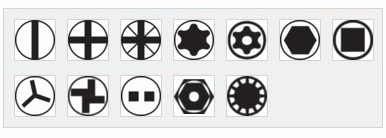
Evo zgodnog kompleta bit-ova za srafciger - sadrzi sve nemoguce dodatke za tzv. bezbednosne srafove: http://www.conrad.de/ce/de/product/814489/Basetech-147tlg-Sicherheits-und-Spezial-Bitsatz-814489-Bit-Set-AbtriebSchlitzPHPZSWInnensechskant-ZollT-Profi/SHOP_AREA_17609&promotionareaSearchDetail=005
-
Trenutno na sajtu 4 članova, 1 Skrivenih, 40 Gosta (Pogledaj celu listu)
-
Forumska statistika
9.2k
Ukupan broj tema451.8k
Ukupan broj objava